
Author: Site Editor Publish Time: 2026-06-02 Origin: Site


Before checking routine items such as oil and filters, one critical component is often overlooked—the radiator.
When a generator set overheats, the consequences range from reduced power output to cylinder scoring, shutdown, or even complete engine failure. However, even when maintenance schedules are followed, abnormal temperatures can still occur.
Q: What causes industrial generator radiators to clog and overheat?
Radiator core blockage is driven by two compounding factors: mineral scale deposits forming inside coolant tubes, and dust or debris accumulating on external cooling fins.
According to heat exchanger engineering research published in Derc Salotech, scale deposits can reduce heat transfer coefficients by up to 80% due to their crystalline structure and poor thermal conductivity—with severe fouling reducing overall system efficiency by more than 50%.
Industy or industrial environments, fin blockage progressively restricts airflow, accelerating the decline in cooling capacity well before any warning indicator is triggered.
Q: How does low coolant or poor circulation cause generator overheating?
Insufficient coolant volume reduces the system's baseline heat-absorption capacity, but internal tube blockage from corrosion debris presents a subtler and often more dangerous failure mode.
As flow rate drops, heat distribution across the core becomes uneven, creating localized hotspots that may not register on standard temperature gauges until component damage has already occurred. According to Cummins generator maintenance guidelines, coolant should be tested every 1,000 operating hours for concentration and chemical balance—intervals that, when missed, allow corrosion and scaling to progressively restrict flow.
Q: Can a faulty thermostat or fan cause a generator set to overheat?
Yes—and both represent fast-onset failure modes.
A thermostat stuck in the closed position forces coolant into a short internal loop, completely bypassing the radiator and eliminating its cooling function entirely. A degraded fan motor or loose drive belt compounds the problem by reducing airflow through the core.
Industry technical sources note that radiator blockages and cooling system failures together account for the majority of generator overheating incidents, with clogged or leaking cooling systems cited as the root cause in approximately 70% of cases.
Q: How does a marine or chemical environment shorten radiator service life?
Salt spray and corrosive airborne gases attack aluminum fins and copper tubes at an accelerated rate, forming micro-pinholes that cause gradual coolant loss and pressure drop.
Standard outdoor lighting fixtures, as one documented comparison shows, typically fail within 12 to 24 months under high-salinity exposure without specialized corrosion protection, illustrating the dramatically shortened service life of unprotected metal components in coastal conditions.
For generator radiators operating in these environments, enhanced material specifications or corrosion-resistant coatings are not optional—they are an engineering necessity.
Q: What role does engine vibration play in generator radiator failure?
Generator sets produce continuous mechanical vibration during operation, generating cyclic stress at the joints between the radiator core and tube sheets.
Peer-reviewed failure analysis published in ScienceDirect (Engineering Failure Analysis, 2016) confirmed that fatigue cracks initiating from tube-to-tubesheet welded joints—driven by resonant vibration and periodic thermal loading—represent a recognized and well-documented failure mechanism in heat exchangers. A separate review of tube-to-tubesheet failure cases identified vibration as one of the primary contributing mechanisms, with thermal fatigue accounting for approximately 20% of recorded failure cases. Early-stage seepage at weld joints is the key diagnostic indicator; left unaddressed, crack propagation accelerates under continued cyclic loading.
The following content is based on the long-term practices of SINRUI, a professional radiator manufacturer.
1. Raw Material Control
SINRUI radiator core fins are manufactured from high-purity copper strip conforming to ASTM B152 / JIS H3100 standards, with tightly controlled composition and consistent mechanical properties. Monthly copper consumption exceeds 150 metric tons, providing the material stability required for large-volume and repeat OEM orders.
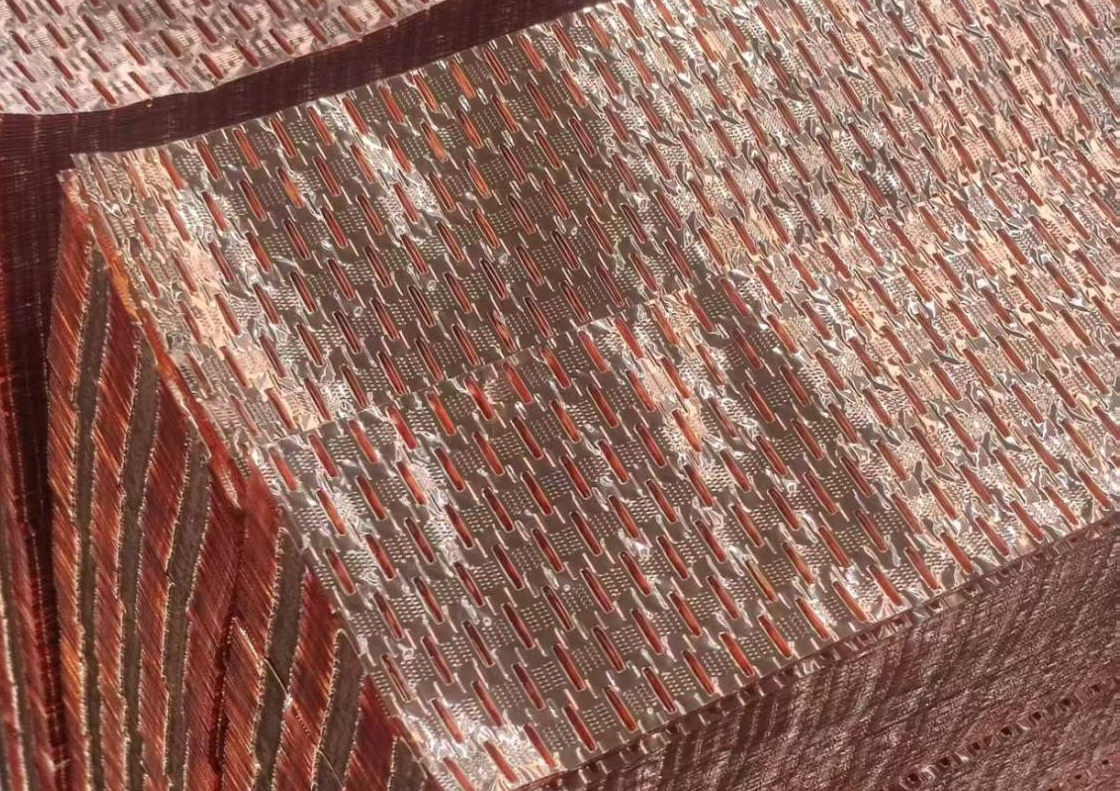
Flat coolant tubes are precision-folded from brass sheet using dedicated slitting equipment, then subjected to hot-dip tinning during the same production stage to establish baseline corrosion resistance before assembly.
Component | Material Grade | Applicable Standard | Key Property |
Core fins | High-purity copper strip | ASTM B152 / JIS H3100 | Thermal conductivity, formability |
Flat tubes | Brass sheet (Cu-Zn alloy) | ASTM B36 / JIS H3100 | Pressure resistance, solderability |
Marine-grade fins | Hot-dip tinned copper | — | Corrosion resistance in C4/C5 environments |
Marine-grade tubes | Admiralty Brass C44300 | ASTM B111 | Seawater corrosion resistance |
2. Specialized Solution for Marine Environments
For generator sets operating in coastal, offshore, or chemical-plant environments—classified as ISO 9223 Corrosivity Category C4–C5—SINRUI applies hot-dip tinning to both fins and tubes as a standard process upgrade.
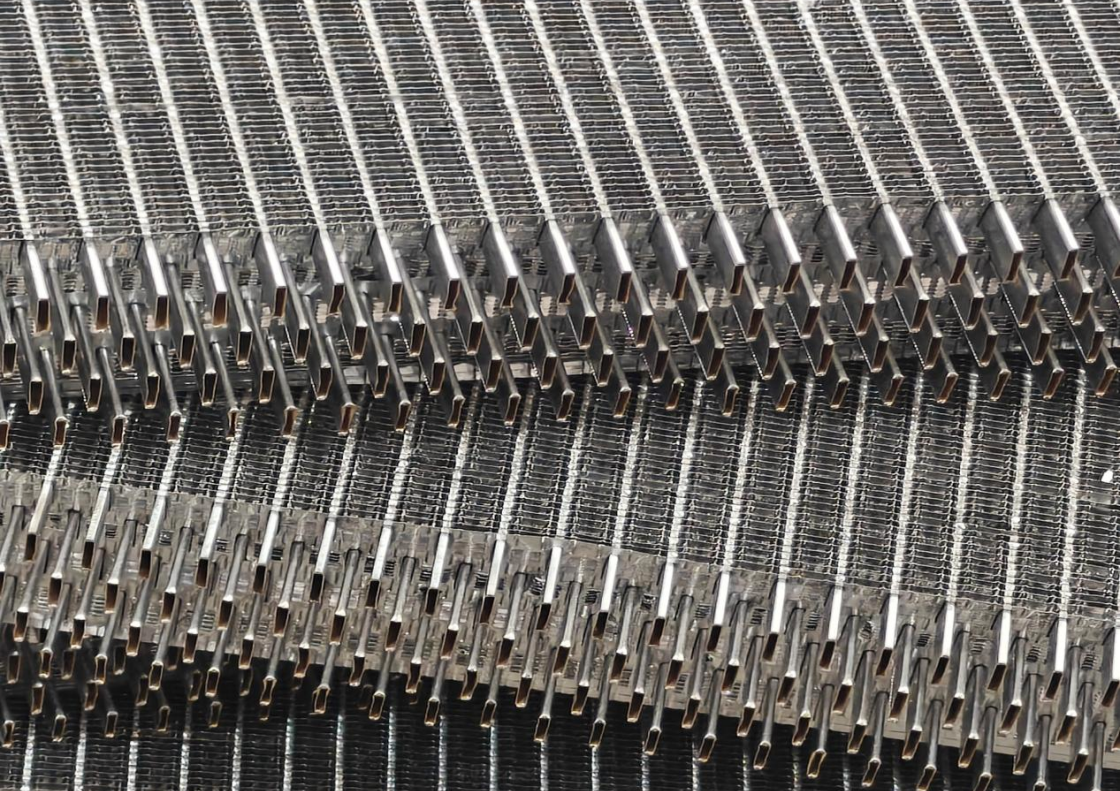
Post-tinning, the protective layer forms a metallurgical bond with the base copper, dramatically slowing the electrochemical attack of salt spray and humid air. Verified service life in marine environments reaches 15 years, compared to 2–3 years for untreated standard radiators in equivalent conditions—significantly reducing replacement frequency and total cost of ownership for coastal operators.
Environment Type | Standard Radiator Service Life | SINRUI Marine-Grade Service Life |
Controlled indoor (ISO C1–C2) | 10+ years | 10+ years |
Coastal / high humidity (ISO C4) | 3–5 years | 15 years |
Marine / offshore (ISO C5-M) | 2–3 years | 15 years |
Chemical plant (ISO CX) | 1–3 years | Available on request |
3. Anti-Vibration Structural Design
Generator sets produce sustained mechanical vibration throughout their service life. Peer-reviewed failure analysis (ScienceDirect, Engineering Failure Analysis) confirms that fatigue cracking at tube-to-tubesheet welded joints is one of the primary documented failure modes in heat exchanger cores subject to cyclic loading.
SINRUI addresses this with two structural measures applied in combination:
· Thickened tube sheets on both sides of the core increase the cross-sectional area at the joint—the highest-stress zone under vibration loading
· Secondary solder flooding: after initial welding, molten solder is poured a second time over the tube sheets, filling micro-gaps and creating a continuous, integrated bond across the entire tube-sheet interface
The result is a joint that distributes cyclic stress over a larger bonded area, resisting the crack initiation that causes early seepage and progressive coolant loss.
4. Fan and Motor Components
All fans, motors, and rotating components undergo independent performance verification before assembly, with parameters recorded against design specification:
Parameter | Test Method | Pass Criterion |
Airflow (CFM / m³/h) | Anemometer measurement | ≥ design spec ± 5% |
Motor current draw (A) | Clamp meter at rated voltage | Within nameplate range |
Temperature rise (°C) | Thermographic measurement at rated load | ≤ design limit |
Vibration / noise | Run test at operating speed | No abnormal resonance |
Components that fail any single parameter are rejected before integration into the cooling assembly.
5. Factory Testing System
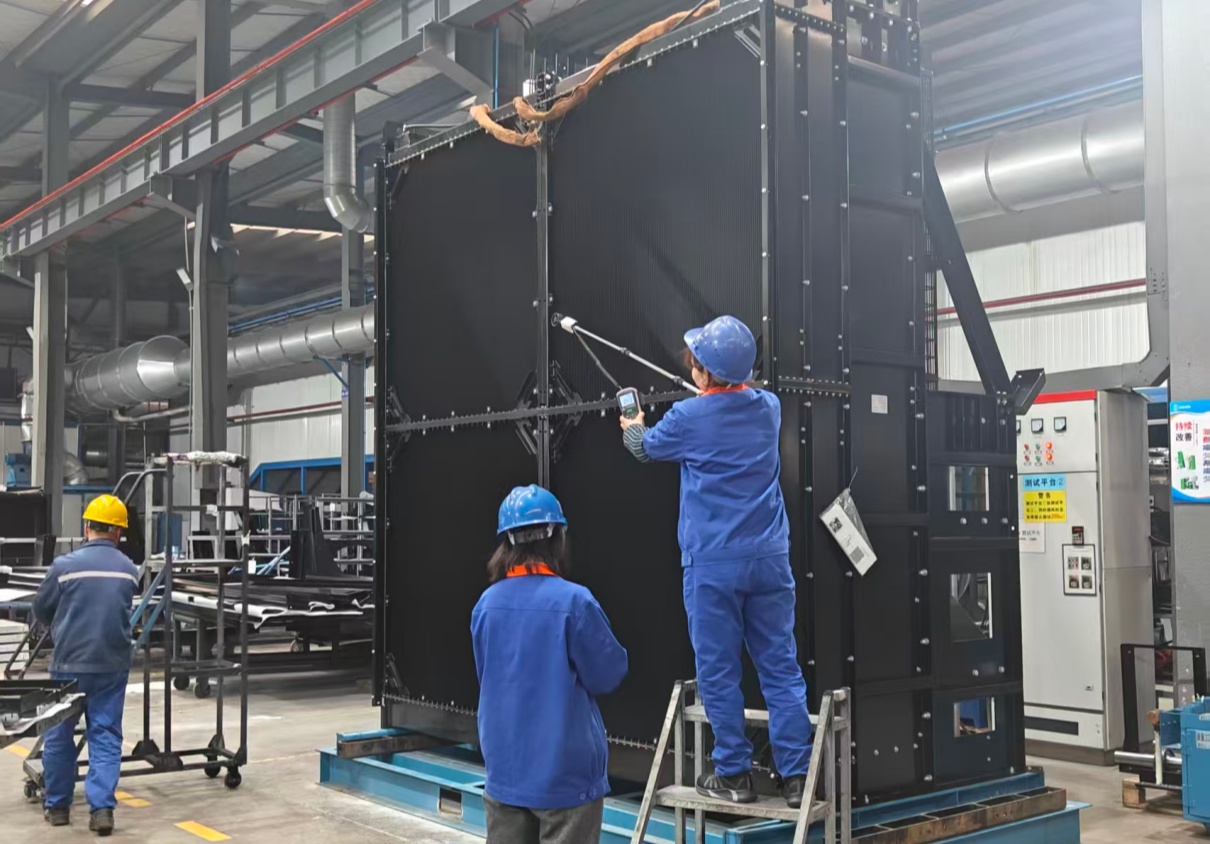
All SINRUI radiators undergo multiple inspection procedures before leaving the factory:
Test | Method | Purpose |
Core pressure & leak test | Individual hydraulic pressurization | Eliminate internal leakage before assembly |
Full-system operational test | Powered run test | Verify airflow, thermal performance, and motor function |
24-hour pressure hold test | Static pressure retention | Confirm system sealing under sustained load |
Weld strength inspection | Visual + mechanical check | Identify cold joints or incomplete fusion |
Coating adhesion test | Steam exposure test | Confirm paint integrity under high-temperature, high-humidity conditions |
Only after all inspection items are passed can a radiator be shipped. This end-to-end quality control system is the fundamental reason for SINRUI's continued order growth. We believe that solid manufacturing processes and reliable delivery standards are the foundation for supporting our customers' business development.
SINRUI customizes heavy-duty radiators engineered as direct-fit replacements for world-class generator sets, including Cummins (QSK60, KTA50, QSX15), Caterpillar (3516, C32, C18), MTU (16V4000, 12V2000), and Perkins (4012, 2806) series — ensuring 100% thermal compatibility and bolt-on installation.
For non-standard dimensions, remote-mount configurations, or dual-circuit cooling requirements, SINRUI provides engineering drawings prior to production. OEM and ODM orders are accepted.
→ View All Compatible Generator Radiator Models


